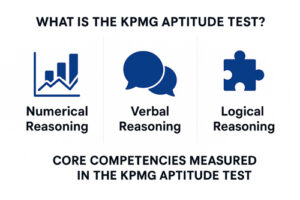
What the KPMG aptitude and situational judgement tests are: Online assessments measuring numerical, verbal, and logical reasoning skills, along with cultural fit through realistic workplace scenarios.
Why KPMG uses these tests: To objectively and consistently identify candidates with strong analytical ability, sound judgment, and alignment with the firm’s values across a large applicant pool.
How to prepare effectively: Practice timed reasoning exercises, review KPMG’s core values, and learn to select responses that reflect collaboration, integrity, and client-first thinking.
The KPMG situational judgement test and the KPMG aptitude test are now integral parts of the firm’s recruitment process, designed to evaluate candidates beyond what a traditional interview can reveal. These online assessments provide KPMG with a deeper understanding of a candidate’s problem-solving style, critical thinking abilities, and cultural fit. If you’re aiming to secure a role at one of the world’s leading professional services firms, mastering both the aptitude and situational judgement components is essential. In this guide, we’ll break down what the tests are, why KPMG uses them, and how you can prepare to perform at your best.
Want to take a practice KPMG aptitude test? Our All Access Pass gives it to you. Start practicing today.
What Is The KPMG Aptitude Test?
The KPMG aptitude test is a modern, data-driven tool used during the early stages of the firm’s recruitment process. Recently added to KPMG’s hiring strategy, the test combines numerical, verbal, and logical reasoning assessments to evaluate a candidate’s raw cognitive ability.
Alongside it, the KPMG situational judgement test presents candidates with real-world scenarios they might face in the workplace, requiring them to select the most effective and professional course of action. Think of this like a case interview, but to evaluate your cultural fit at KPMG.
A key component is the KPMG numerical reasoning test, sometimes called the KPMG numerical test, which measures your ability to interpret charts, analyze data, and make quick yet accurate decisions under pressure. The goal is to ensure that new hires possess the analytical, problem-solving, and decision-making skills necessary to succeed in a fast-paced consulting environment.
Why Are They Offering This Online Assessment?
The introduction of the KPMG SJT test and KPMG online test is part of the firm’s broader move toward more objective and scalable hiring methods. KPMG serves clients in a complex, data-heavy environment where accuracy, judgment, and analytical skills are critical. These assessments allow the firm to evaluate candidates on competencies that directly translate to day-to-day success.
By implementing an online assessment test, KPMG can efficiently compare large volumes of applicants, identify top performers early, and maintain consistent evaluation standards across regions. The situational judgement test KPMG component also ensures candidates are aligned with the company’s values, teamwork expectations, and client-first mindset, factors that are just as important as technical skills in a client-facing context.
How To Pass The KPMG Aptitude Test
To succeed in the aptitude test for KPMG, you need both technical preparation and an understanding of the firm’s culture. The KPMG aptitude test assesses your ability to think logically, analyze data, and communicate clearly under time constraints. Practicing with sample exercises, particularly Management Consulted’s math drills, will dramatically improve your speed and accuracy.
In addition, familiarize yourself with KPMG’s core values, as they will influence your responses in the situational judgement test KPMG section. Prepare by reviewing the firm’s client service principles, our firm profile on KPMG, and consider how you would approach real-world workplace scenarios. Strong preparation will not only boost your score but also demonstrate that you’re a candidate who can thrive in KPMG’s high-performance environment.
KPMG Situational Judgement Test
The KPMG situational judgement test is designed to assess how you make decisions in realistic workplace situations. You’ll be presented with scenarios involving colleagues, clients, or project challenges and will need to choose the best response from several options.
Success here depends on understanding the priorities of a professional services firm – client satisfaction, ethical integrity, collaboration, and efficient problem resolution. Since the KPMG SJT test doesn’t have one “correct” answer for every question, you should aim to select the response that best aligns with KPMG’s values and the practical demands of the consulting industry. Practicing with similar scenarios and networking with current consultants to understand what consulting life is really like will help you recognize the patterns in KPMG’s expectations.
What Is KPMG Looking For In The Assessment Test?
The KPMG online test, including both the aptitude and situational judgement elements, serves as a filter for candidates who possess the skills and mindset necessary for consulting excellence. The firm looks for analytical thinking, numerical proficiency, ethical judgment, adaptability, and strong communication skills.
In the aptitude portion, KPMG wants to see evidence of your ability to handle complex information quickly and accurately, especially in the KPMG numerical reasoning test. This demonstrates not only technical skill but also composure under time pressure. All these qualities are universally sought by top consulting firms and are most effectively built through case interview preparation.
In the situational judgement test KPMG, the focus shifts to cultural alignment. KPMG values collaboration, respect, accountability, and innovation. By choosing responses that reflect these principles, you’ll show that you’re prepared to contribute positively to team dynamics while maintaining client trust.
Overall, excelling in the KPMG assessment test means balancing raw problem-solving ability with strong interpersonal judgment. You’re not just proving that you can analyze data, but that you can make the right interpersonal calls when it matters most.
Conclusion
The KPMG aptitude test and KPMG situational judgement test are more than just hurdles in the hiring process – they are tools KPMG uses to ensure it brings on professionals who can excel in both technical and interpersonal aspects of consulting. By understanding the structure of each component, practicing your analytical skills, and aligning your judgment with KPMG’s core values, you can greatly increase your chances of success. Preparation, focus, and self-awareness are key to turning these assessments into an opportunity to stand out in a competitive recruitment landscape.