Ben van der Schaaf of Arthur D. Little and Stephane Budel of DeciBio sat down with moderator Ish Mawla to talk about why specialist firms beat much larger ones, where AI is overhyped, what private equity now asks for, and what their firms look for in new hires.
Both firms appear in MC’s 2027 healthcare consulting research, which found specialists winning mandates against firms 50 times their size.
Watch the replay below.


Key Takeaways
- Specialists win on focus. Every person at a specialist firm works only on relevant projects, partners stay in the casework, and the client gets the A team. Both partners gave this as the reason smaller firms beat much larger ones.
- Clients pay for outcomes, not decks. Both firms see fees tied to results, including shared savings and fees at risk. Clients also want tactical deliverables they can implement, not a PowerPoint.
- Judgment is the differentiator in the AI era. Clients now type consultants’ facts into Claude or ChatGPT and challenge them on the spot. One Arthur D. Little colleague built a 17,000-line quality-systems model over a weekend that once would have taken six months. It only worked because of his 25 years of experience.
- Private equity wants to know how a company wins. Stephane said DeciBio’s private equity diligence requests have almost doubled in the last 12 to 18 months. The question moved from “is this market attractive?” to “how does this company win in its segment?”
- Both firms hire for initiative. Ben looks for smart people who can be trained, plus technology fluency (the “forward-deployed engineer” who bridges client tech teams and the firm). Stephane looks for entrepreneurial self-starters with real interest in precision medicine. He said “curiosity” doesn’t differentiate anyone.
- Overhyped: AI. Underappreciated: diagnostics, complexity, and data. In the rapid-fire round, both partners called AI overhyped. Stephane named diagnostics as underappreciated, and Ben named industry complexity and data.
Meet the panelists
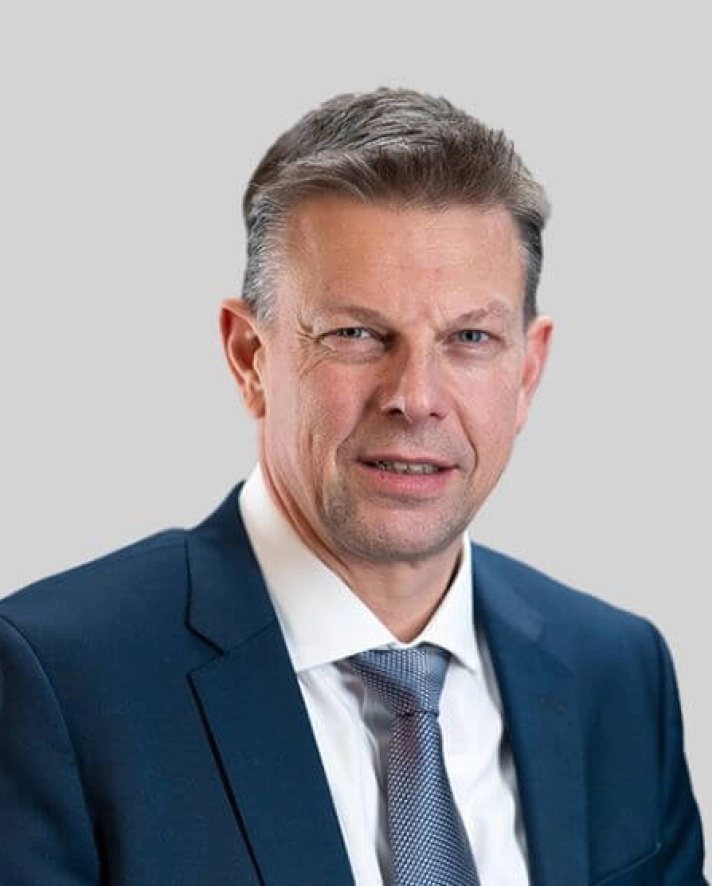
Ben van der Schaaf
Partner – Arthur D. Little
Leads the US Transformation practice and sits on the firm’s Board of Directors.

Stephane Budel
Founding Partner – DeciBio
Has advised 50+ clients across research tools and clinical diagnostics.
Moderated by Ish Mawla – MC case coach and former BCG consultant
Land your consulting offer
- Job Board – Explore top firms hiring in healthcare consulting.
- Black Belt – Personalized prep support: MBB-led coaching, resume edits, and digital resources.
Activate your recognition
Ranked firms: learn more about badges, amplification, and insights from your ranking, then reach out for next steps: [email protected]
Full transcript
Welcome and what MC's healthcare research found (00:00)
Japheth Mast: Happy Thursday, everyone. Today is October 22nd, and we're glad to have you with us for the 2027 Healthcare Consulting Panel, with two partners from Arthur D. Little and DeciBio. You're going to be very glad that you tuned in today. We've got an amazing conversation prepared for you, diving into some of the insights we found in our research on the healthcare consulting market as we put together our ranking of the top firms in the space for 2027.
That ranking is live, and I'll share a link to it in a moment. We'd love to have you check it out. Today will be a great conversation on trends, risks, myths, and misconceptions from our research. Really quickly, our research included surveys of consulting firms in the industry, interviews with practice leaders, and other outside research. We found a couple of things that separate top healthcare consulting firms.
Number one, they know their identity. They know whether they play on the care delivery side of the market or the life sciences side. They know where they are and who they are, and that helps them separate themselves. In addition, we found that specialist firms with a clear specialization and a clear position often end up winning work from firms much, much larger than them. That was an interesting finding.
The last one is that the fastest-growing firms sell measurable operational outcomes, not just strategy decks. Pay attention to that as we go through the conversation, because we'll dive into it in more detail. Here's a slide sharing the two sides of the healthcare market as we see it in 2026–2027. On the right side, you can see where both of the firms here today, Arthur D. Little and DeciBio, play.
I'd love for you to check it out for yourself, so you can scan the QR code here on the right, pull your phone out, and it will take you to where you can see the full ranking. It will tell you the top 10 firms, how we put together the ranking, and the different criteria we looked at. Further down the ranking, you'll see the companies that lead each segment inside the market, which is interesting as well. It breaks down which companies are the leader in a specific segment of healthcare consulting. For example, DeciBio today leads the precision medicine segment on that market map.
Today we've got Stephane with DeciBio and Ben with Arthur D. Little, so you'll see in the ranking where these two firms placed, and you'll get to know them over the course of the panel discussion. Go ahead and check out the ranking. I'd also like to thank Ish, who is with us today. Ish is a Management Consulted case coach, a panel instructor, a former BCG consultant, and a former healthcare consultant, and he's still involved in the healthcare space. He'll be moderating today's discussion, so thank you, Ish, for doing that.
One last thing I'll call out for the firms on the ranking: there are a whole lot of ways you can take advantage of it. We've got badges, additional ways to amplify the message and promote your firm, and additional insights into the industry if you'd like to take advantage of that. Just reach out or scan the QR code here on the right side of the screen. With that, we're going to get into the conversation. Time is ticking, so I'm going to turn it over to Ish. I'd love for you to start off with a one-minute introduction of yourself, so the folks listening can get to know your background and set the stage for this conversation. Ish, I'll give you the floor.
Panelist introductions (04:43)
Ish Mawla: Hey, everyone. Nice to see a fantastic group here. My name is Ish. I am a former consultant from the Boston Consulting Group, and I am a healthcare strategist. In my past life I was in academia, a neuroscientist by training, and one of my passions is coaching. A lot of you out there are looking for positions at consulting firms, and helping you go through that process is something I love doing on my side.
We have two incredible folks here today: Ben from Arthur D. Little and Stephane from DeciBio. Thank you both for being part of this fantastic panel. I'd love to get your expertise today and hear your perspectives on the healthcare industry. Starting off, I'd like a quick minute of introduction from each of you. Let's start with Ben.
Ben van der Schaaf: Thank you, Ish. Very good. Glad to be here. My name is Ben van der Schaaf. I'm a partner with Arthur D. Little, based out of New York, focusing predominantly on the healthcare and life sciences space, with a focus on R&D and transformation. Arthur D. Little is a global firm working in multiple sectors, of which the healthcare space is one of the most important.
Ish Mawla: Fantastic. Thank you, Ben. Stephane?
Stephane Budel: I'm Stephane Budel, a partner at DeciBio. I have a technical background, a PhD in neuroscience, like you, Ish. But unlike you, I wasn't able to land a job at BCG, where I did a program called The Bridge and didn't get an offer. Nonetheless, I went on to work at L.E.K. for a couple of years before I started DeciBio, where we focus on precision medicine, and on the tools and technology and the role they can have in precision medicine. I'm a huge believer that the precision medicine revolution is going to be driven by tools and diagnostics as opposed to therapeutics, and we can spend more time talking about this.
Where Arthur D. Little and DeciBio sit in the healthcare market (06:58)
Ish Mawla: Okay, fantastic. Thank you both for that introduction. The opening question I wanted to ask you both is about the two segments of this business. Healthcare is such a big industry, with so many segments. The two broad ones that came out in our report this year were the systems side, care delivery, and life sciences. I know firms typically tend to be in one segment versus the other, but I wanted to hear from each of you, from your firm's perspective, where you particularly play. Where do you sit in this market? How do you see integration between these two spaces, if there is any? Starting off with Ben.
Ben van der Schaaf: Thank you. In the US, ADL plays in the life sciences space, not in the care delivery space. With that said, there are certainly some touch points. We do a lot of work in clinical trials, which of course connects very closely with care delivery and hospital systems, and clinical trials are now an important part of care delivery in a number of indications, for a number of hospitals and certain groups of patients. So our clients are mostly in the life sciences space, with a few exceptions where we work on the hospital system side, with a focus on their interactions with biopharma and with sponsors.
That's the US. If I look globally at what we do, we have a big group active in the Middle East who are much more focused on care delivery, setting up hospital systems and care delivery systems. They work quite closely with some of the US hospital systems, to learn from them, look at what they do, and implement some of the best practices. That's the care delivery side, not necessarily the healthcare system that they then adopt. Across our places in the globe, we cover the whole spectrum. But again, back to the US, our clients are pretty much life sciences companies, and that includes big pharma, biotech, and some of the medical device side, but that's mostly where we are.
Ish Mawla: Fantastic. Stephane?
Stephane Budel: We are more narrow than that. We live almost entirely on the life sciences side, and even within life sciences we have a very narrow lane, where we focus on precision medicine technologies, as I mentioned. We're looking at the tools, the diagnostics, such as genomics technologies, and the infrastructure that enables it. But we wouldn't work with hospital systems or payers, for example.
When people typically come to us, it's because they have a new technology and they're trying to understand how big the market is that this technology could address currently. How does it segment within each of these segments? What is the size, the growth rate, the key drivers, the moderators, the key trends, the competitive landscape? And as a result, what does the universe look like five years out, and where can we participate and where can we win? That is what makes the most sense. What we like to communicate to people is that we help our clients understand how a beautiful technology can actually translate into a beautiful market five or ten years down the road.
Why specialist firms win against much larger competitors (10:53)
Ish Mawla: Amazing. Thank you both. A follow-up question to that. One of the other things our report found this year was that specialist and boutique firms like yours are winning work with clients against firms that are multiple times their size. From your perspective, sitting in this industry, what do you think is driving that? For this one we'll start with Stephane.
Stephane Budel: Yeah, so I obviously have a very biased answer and opinion here, because we literally started DeciBio based on that thesis, this idea that specialization wins and matters, because a lot of your clients just don't want you to learn the market on their dime. When they come to us with a question, for example on a precision medicine technology that might be disruptive, we can work with them directly by thinking about the second and third order implications, as opposed to learning exactly how that technology works, what its role is, and benchmarking it against what's on the market. We find that having this expertise in-house is very important.
For that reason, we don't only offer consulting services. We also have proprietary databases that we sell, and market reports. We do that because it enables us to be always up to speed on the latest trends. We talk to more than 1,500 labs a year to try to understand what they do, and again, we own that data. This is not the work that we do for clients.
To answer your question more precisely, this is what enables you to win against companies that are, frankly, up to a thousandfold your size sometimes. When you work with a firm that has very niche expertise, every single person at the firm, from the partner all the way down, has worked only on projects that are relevant to what you do. Interestingly, recently we had to communicate with a potential client that was worried about conflict of interest. They asked, "Well, have you worked with other companies doing that?" And it's like, yes, absolutely. Every single one of the companies we work with is your competitor or potential customer, because that's the work we do, and that's why you should be working with us.
Ish Mawla: Amazing. Ben?
Ben van der Schaaf: Yeah, I think the expertise that Stephane mentioned is a big part of it, and there are a few factors to it. When you go to a specialist firm, you know they will be expert, and that's the work they all do. The bigger firms have those experts too, but they're spread much thinner and may not be doing this work all the time. So they are not as plugged in to what is going on and what is current, and maybe do the work at one or two clients rather than at five or ten or more.
The other thing is that if you work with the small firm, you can probably count on the fact that you have the A team. If you work with the bigger firms, especially if you are a smaller client and not their A-level client, that's maybe not a given, because big companies have to prioritize. Not everybody is a star. So that comes into play as well: what are your priorities? There are probably other reasons. Small companies are nimble, they can react to specific requests, and they tend to work much more with the client.
One other factor is senior involvement. I think Stephane would probably endorse this. At the smaller companies, the seniors, the partners, are actively involved in casework, whereas at the bigger firms that's much less the case. They're involved in selling, and they coach their teams, but they are not as actively involved in figuring out what the case is all about and working with their teams and with the client.
Stephane Budel: Yeah, well said. I would definitely second that.
Where time gets lost on the 10-year path from lab to patient (15:14)
Ish Mawla: Fantastic. Thank you both. I wanted to dive into some deeper questions now about the industry and the trends you're seeing in the market. We know that in the life sciences industry it takes more than a decade to get a new therapy from the lab to patients, and it seems like every company is trying to shorten that in a lot of different ways, so that value can be unlocked much faster. From each of your perspectives, where is most of that time getting lost today, and where could potential clients in this space think about unlocking value? I'll start with Ben for this question.
Ben van der Schaaf: I think a big factor we shouldn't overlook is the actual biology that's part of these 10 years. That's much harder to accelerate than other mechanics. In some cases it will take a year or a year and a half for results to be known. Then there is the whole process of Phase 1, Phase 2, Phase 3. Sometimes you can skip one, depending on what you're trying to do. Within those trials, they can be extraordinarily complex, with lots of moving parts and lots of parties involved, and lots of countries and regulatory systems. Within that complexity are lots of little gains to be made, but not big ones, generally.
There is, in my view, no silver bullet that makes clinical trials go much faster. But if you look at the more complex, larger trials, you can find lots of little things that, if you are well coordinated and have the right data, you can accelerate and win time significantly. Over two or three trials, that can add up substantially. And let's not forget, with clinical trials, the majority, probably 80 to 90 percent, run into some kind of delay. It has to do with finding patients, the regulatory aspects, and finding sites or getting sites to perform. There are lots of aspects, such as the relationship between the sponsor and the CRO, for example.
I think that's a big one. And once you finish the readouts of your clinical trials, the process to getting to submission is going faster. Technology is definitely helping that, but I think there is still a lot of room for improvement. It's again multiple parties and lots of information, and yes, AI is making its entrance there, but it's by no means a smooth ride yet. So I think there is definitely room within that 10 years, but it's not necessarily one thing, and there are certain things that cannot be accelerated.
Stephane Budel: Yeah, I would agree with everything Ben just said. I'm probably a little bit more bullish on the role of biology and our capabilities to actually accelerate that. It seems to me that a lot of the bottleneck comes later in the development process, at least that's my impression. Please keep in mind that we are more on the diagnostic and tool side of things than the therapeutic side as I say this. With that being said, from my vantage point, there is definitely time it takes to collect this information, as Ben touched on. In a Phase 3 trial, sometimes you need to get outcome data three years out, and that's inherently limiting when you look at some of the tests that have been done, even on diagnostic tests, as in the case of GRAIL, for example.
On the biology, my impression is that it's not really the bottleneck, and that this bottleneck is actually shrinking, despite the fact that the biology is absurdly complex. That complexity is going to be hard to change, because the complexity of biology comes from the fact that our cells come out of 2.5 billion years of evolution and have to be a self-assembling organism. You start from one cell and have to make a human being, so you have this absurd level of complexity.
One of my contrarian views, I would say, is that with AI we're going to be able to find some shortcuts that enable us to create new pathways that were not necessarily available within the typical biological framework. We may actually construct pathways within a cell, potentially, in order to get some therapies, whether via gene therapies or direct cell therapy, in vivo or ex vivo.
How AI is changing client expectations (20:25)
Ish Mawla: Fantastic. You both brought up AI, and I know that's the buzzword of 2026. It started just a couple of years ago, and the conversation seems to be accelerating day by day. I know this is particularly relevant for Stephane, being in the diagnostic space, where AI is a big portion of it. Starting off with you, how are client expectations changing and evolving as AI is being embedded more and we're seeing all of these use cases? A lot of clients started off with pilots, and now they want to accelerate those pilots into use cases. Stephane, any comments there?
Stephane Budel: Yeah, it's interesting. If you had talked to me two years ago, I would have told you I was quite concerned that AI could have a completely transformational role, in a way that it could take away our jobs. That is not what we've seen at all. If anything, AI is enabling us to deliver more complete deliverables for clients, in the sense that what they expect now is more insights, and us making more of the data we deliver for them, as opposed to saying, "You don't have to do that work."
There are additional layers of complexity we can add as we do bespoke consulting work for our clients. In addition, with the proprietary data sets we have, AI is really good at fetching the information it needs to help triangulate what's relevant for the consulting work. At least in our hands, we find that these proprietary assets integrate with AI to help us better execute the consulting work we do for our clients. But it's certainly a moving target. Every couple of months an analyst comes back with a new AI tool they heard about that they think we should implement, whether it's Wispr Flow, which is now pretty old, or Granola, which we were also very early adopters of. These tools are making people's lives easier and, in some sense, enabling them to punch above their weight, which we really appreciate.
Ben van der Schaaf: Yeah, I would agree with that. Clients also use AI. It's not just the consultants. They can do a lot of things now that they used to hire consultants for, at least on the surface. When you come up with information and facts, you'd better get them straight, because they're immediately typing them into Claude or ChatGPT and challenging you on the spot. If you have a new tool or system, they think they can vibe code it in about 10 minutes and create their own. Some of that is true and some of it is not, and some of it is quite dangerous. But at the same time it's real, it will get better, and we need to learn to live with that.
The questions we get around this are also, "Yes, all my employees now use Claude and GPT, so they're more productive, but how does that translate to actual results? Are you going to lay off 10 percent of all your people? Are they all going to work 90 percent?" Probably not, and distributing that over is not an easy thing to do. So what they come to us for is helping them reimagine what could be different with AI, rather than doing everything we're already doing, only a little faster or a little better.
As consultants, we use it a lot. That doesn't necessarily save a lot. It saves time in certain areas, but then you get all the outputs, and we've all read the stories in the news about companies issuing reports they hadn't checked very well. So all that output needs to be validated, verified, and iterated. The time savings are there, but they don't always translate immediately into shorter project times, because what you do with that time is make sure what you deliver to your client is actually good, better than what you did before, and something they can use and couldn't have done themselves with 10 minutes in a ChatGPT conversation. So I think that's at least some of it.
Why clients now buy outcomes instead of slide decks (25:17)
Ish Mawla: Fantastic. Thank you both. On that note, Ben, you talked a bit about outcomes and what consulting firms bring to the table. That's something we found in this year's report: a lot more projects are being sold around outcome measures. Could you both highlight what consulting firms are bringing to the table now, tied to outcomes, that maybe wasn't normal in the industry five years ago? Ben, I'll start off with you.
Ben van der Schaaf: Thank you. Yeah, I think it goes back further than five years ago. It's results-based: you deliver something. If you look in the cost-saving space, it wasn't unusual for firms to take a share of the savings they were generating for their client. Upfront they might have taken risk by getting paid very low fees, or by putting all their fees at risk in exchange for some of the savings. From the client's perspective, I think that's totally the right thing to do. You want results. You don't just want people giving you nice slide decks that either sit on the shelf or don't get used, or have people do jobs that could have been done by your own people. Maybe the slides would have looked less nice, but the outcome would have been the same.
So for clients, absolutely, and consultants are adapting to it. They have to adapt, because clients are not going to pay anymore for nice slide decks and lots of research, since a lot of the research can be done by themselves now. Consultants need to understand what they're delivering and whether there is value. If they can quantify that, they can demonstrate that they're confident in delivering it, and they can take a risk, putting their fees at risk for a higher upside. If there is a shared interest in the outcome, an alignment of incentives for both the client and the consultant, that's good for both parties.
For the consultant, it's attractive because there should be upside to share in what they generate. Quite often the value they create in their projects could be dramatically higher than their fees, and they don't necessarily see much of that upside. At the same time, if they do a project that actually wasn't quite necessary, they get paid and the client doesn't see a benefit. Both of those have happened. With this more intense focus on outcomes, that will change. I see a real trend. So consultants will have to move to that.
Ish Mawla: Stephane, anything to add?
Stephane Budel: Yeah, that's very much in line with what we've been experiencing. What I would add, and that may be unique to DeciBio given that we're still in the growth phase (the company has been around only 15-ish years), is that we still have a chance to land and expand within our clients and their sites. As a result, what we've seen over the last three to five years is more and more of an expectation that all of the data ties together across the organization and the work we do for different types of divisions. It used to be that all of the projects we did for our clients were relatively siloed. Now there is much more of an expectation of, "Hey, last year you did this work for this division, and this is what you did there. How does that tie to what you're asking or recommending that we do right now?"
That would be number one. Number two, at the risk of sounding like a broken record, we're also seeing more and more demand for actual proprietary data. We sell the project, and they do want these proprietary data sets, to access them and purchase them, so they have the underlying primary research in addition to the overall project we work on. But I would certainly agree with Ben that one of the key trends we've observed is this drive toward more than a PowerPoint deck with a set of slides, toward things that are much more tactical in nature and that people can implement quite readily.
Why judgment and experience matter more in the AI era (30:00)
Ish Mawla: Maybe that's coming through the AI revolution, right? In an age where you can create nice slide decks, clients are probably looking for much more value than just that.
Stephane Budel: Yes, and it goes beyond the data. Now they also want to hear what your judgment is. That's interesting. There is so much information that you have to cut through the noise, through the mass of data, to give the right recommendation on the best path forward.
Ben van der Schaaf: I would add to that that the value is in the experience and the judgment. You can't give GPT or Claude to a junior consultant and have them solve a complex problem, because they don't have the experience or the knowledge to ask the questions, to interrogate, to get to the right answer. That's something that's changing within the consulting model as well. One of my colleagues, just as an example, generated a model around quality systems. It was about 17,000 lines of code, and he did it over a weekend. He said that in earlier days it would have taken him six months. But anyone without his 25 years of quality experience and knowledge of systems would not have been able to do that. So the value is not just brains. The experience, the knowledge, and knowing which questions to ask is becoming the real differentiator.
Stephane Budel: Yeah, and I agree, Ben. I don't know if you've seen this article, and I don't know how old it is, but I think it's in Nature or Nature something, where they show that you need to be at least two to three years in a job for AI to increase your productivity. If you're less than that, it actually decreases your productivity, because you really don't know what you don't know. With three-plus years of experience, when there is a mistake, you know. It does an amazing job 90 percent of the time, but then that last mile, that last 10 percent, it tells you something that would make you lose credibility completely, and you can catch that when you have the experience and expertise. Then it's like, "Yeah, sorry, you're right," and so on, and it corrects as if nothing happened.
But the reality is that there is definitely something about having the expertise to make the most out of AI. That's one of the reasons we also want our analysts not to lean on it too much. You still need to know how to do the job correctly from the ground up before you can rely on AI heavily.
Ish Mawla: Yeah. AI is often like an untrained intern, and how you probe it, how you train it, how you augment with it and collaborate with it matters. So that totally makes sense. Awesome.
Stephane Budel: It really does. What's also interesting right now is that I'm starting to find it can be quite creative as well. It used to be that there was a lot of discussion about, "Well, it's just an LLM, it can only regress to the mean and give you an average answer, or something that has been done before, nothing new, nothing creative." I think now you see that it can actually be an excellent thought partner. And obviously, with that Navier–Stokes problem, or whatever that mathematical equation was that was solved, you can tell that it can do things that are extremely complex and, as I said, really help out.
What private equity sponsors ask for now (33:42)
Ish Mawla: Amazing. Pivoting here to a conversation about private equity. That's another aspect that showed up in our report this year, PE being one of the biggest forces in life sciences consulting right now in terms of sponsoring projects. Could you each talk about the types of projects and asks you're seeing from PE sponsors today that you wouldn't have seen a number of years ago? Starting off with Stephane.
Stephane Budel: Sure. There has been a clear rebound on our end in tools and diagnostics with private equity interest, and in the number of diligences we've been asked to conduct, mostly on the commercial side as opposed to the vendor side for us. Between 2025 and 2026, in the last 12 to 18 months, I think the volume of private equity requests we handle has almost doubled. It's clearly the rebound finally happening, following what we call the COVID hangover, where a lot of our clients had pretty poor performance from a stock perspective.
In terms of what they come and ask us to do, it used to be much more centered on the market and the segments. Now I think what they want to understand is narrower: how does that specific company really win within that segment? And to the point Ben made earlier about operational actionability, there is a bit more of that as well. It's not simply "Is this market attractive?" but taking it a couple of steps further, helping them understand what the key future pillars of growth are that we can go after, and tactically, not simply telling them "those are the three pillars," but how you can address them. Those are some of the key changes we see on the private equity side.
Ben van der Schaaf: Yeah, I think if you look at the last few years, a lot of biotechs have been shaken out of the market just because of the lack of cash. So what's left now is probably pretty good quality companies, either readying for an IPO, a sale, or the next round of funding. And let's not ignore the fact that private equity firms have very sharp analysts themselves. They know how to handle AI and how to do research, and they come up with a very acute analysis. Where they use us is to look at certain portfolios and how the clinical trials measure up.
It's not just "does this product stand well in the market," but how does it compete for patients in clinical trials? How does this mechanism work? Where does this protocol create challenges? How will it go with patients? Are sites going to be willing to accept it, because it's really hard on sites? Clinical trial protocols sometimes tend to be ignorant of, or somewhat ignorant, I don't want to be too broad, of patients and of sites. Sites have lots of things going on, they're often understaffed, and they need to be trained. All these things come into whether there is a good chance of a clinical trial delivering on time, and that doesn't necessarily look at the scientific results. I think that's something private equity is actually quite capable of analyzing themselves.
But for us, it's often: okay, we have this trial, there are 20 others in this space all looking at the same patients, so where are the spaces where you can find patients that they're not looking at? What makes your protocol competitive? If you extend the timeline to getting to market in this particular indication, are you going to be first or second, or are you going to be trailing by enough time that it's not even worth going, or you need to make some drastic steps? A lot of that is operational, and it's definitely due diligence of either the clinical portfolio, the clinical trials, or the asset itself. That's what we see quite a lot more of than we saw before.
What healthcare consulting firms look for in candidates (38:34)
Ish Mawla: Fantastic. Thank you. In our audience we have a lot of folks who want to break into a career in healthcare consulting. From our perspective here at Management Consulted, we know that healthcare consulting firms are heavily hiring, but the profile of the candidates is getting more and more specific. I wanted to ask you both, from your firm's standpoint, what are some of the top traits or skills you look for in 2026 from a candidate? I'll start off with Ben for this one.
Ben van der Schaaf: We still hire very smart young people out of school, who have interest and aptitude and who can be trained, so we develop our own people. What AI does is probably change the speed at which those people develop and need to develop, because clearly every consulting firm is rethinking what its pyramid looks like. At the same time, you can't just cut off the bottom part of the pyramid and expect the top part to stay in shape, so that is still at play.
In addition to that, clearly technology skills are in demand. People who understand technology and AI, but not necessarily coders and data scientists, although those are relevant in the firm, you just don't see them as much in front of clients. It's what the industry often calls the forward-deployed engineer: somebody who understands the business, understands technology, and can be the bridge between the client's technology department, the client, and the consultancy. Those people are not very common, especially if you also expect industry knowledge. I assume that will grow fairly rapidly, with so many people refocusing and learning about the technology. Clearly that is one of the more important factors. I could keep going, but I don't want to pull the rug out from under Stephane, so I'll leave something for him.
Stephane Budel: Sure. My recommendation when candidates apply to consulting firms in general, and normally at DeciBio, is to try to get a sense of the company's values or, depending on what's on their website, their mission, for example. In our case our four values are entrepreneurship, thought leadership, passion, and community. Three of those tie pretty closely to the interest and initiative people have in trying to understand the mission we have. And again, we are more on the diagnostics and tool side of things than the therapeutic side.
Whenever we're about to make candidates an offer, we often tell them, "Do you realize that we really don't work as much with pharma on the therapeutic side, but much more on the diagnostic side?" If they do, that tends to be a pretty good sign. If they come in and tell us about the latest diagnostic test they're excited about, such as an early cancer detection test, or they have a family member with a rare disease who has been through a diagnostic odyssey, those are some of the signs that tell us they're generally interested and passionate about precision medicine technologies. That would be one of the key things.
One of the questions we ask as an icebreaker before the presentation from final-round candidates is: if your classmates were to describe you in three words that completely differentiate you from the other hundred people in the class, what words do you think they would use? One word almost everybody says is curiosity, and we want people to be curious. That's true, and it's an extremely important attribute, but it's not very differentiating. For me, one word I'm looking for is something that ties to entrepreneurial traits.
A lot of consulting firms love entrepreneurial people, because this is the type of behavior you need in consulting, being willing to push and have grit. But in addition, we really rely on people to write their own story once they join the firm. We encourage analysts a year in to even write on our blog about some of the thoughts they have. So we're looking for people who tend to be self-starters, excited about precision medicine, and interested in the business world. Not people who get stuck in the science, but who also want to make sure this innovation actually reaches the market.
Ben van der Schaaf: And I think, Stephane, you hit on something with that entrepreneurial word. It's really something we value as well. Going back a few questions to why small organizations beat large ones, the smaller ones are much more able to step outside of their SOW, do what's necessary, and bring something extra. They have much more freedom to be entrepreneurial with or toward the client than the larger firms would. I think it's a really important aspect.
Stephane Budel: I agree 100 percent.
Rapid fire: what's overhyped, underappreciated, and worth investing in (44:16)
Ish Mawla: Fantastic. You both gave wonderful pointers, so hopefully the aspiring candidates in the audience will take notes and put these items on your preparation journey. Okay, we're now going to go into some rapid-fire questions, and this is free for all, so whoever wants to get us started with each question, feel free. The first one I have here: what is one thing in life sciences consulting that you think is overhyped right now?
Ben van der Schaaf: I would still go with AI. It's clearly big and it's getting bigger, but companies still have massive problems with all the fundamentals. Is their data right? Is the FDA going to approve my facility? Are patients coming into my clinical trial? Yes, AI shows up in many ways, but the fundamentals of the industry, and of how companies get drugs to market and how they sell drugs, are really still the same. If you talk about clinical trials and getting patients, I think people are having the same conversations they were having 25 years ago.
Stephane Budel: Yeah, I should have gone first. That's the right answer in my opinion as well. If I try to add a little nuance, maybe it would be the idea that AI will replace expertise and judgment. We touched on that already, both Ben and I. I'm trying to think about what might be number two, but AI is such a large front-runner in terms of how much mindshare it takes right now that I really think that's the big one.
Ish Mawla: Okay, fantastic. Next one: what is the one thing that is underappreciated about the life sciences consulting industry?
Ben van der Schaaf: You go, Stephane.
Stephane Budel: On my end, I would go with diagnostics. Historically it's been very hard for payers to actually pay for diagnostic tests, and I'm really hoping that is changing. I think it is changing with precision diagnostics. If you look over the last 30 years, since the first tests launched, it's very easy to think that progress in diagnostics has been quite linear. But the reality is that there have been massive changes just over the last five years, where a lot of these very complex labs, such as NeoGenomics, CareDx, and Veracyte, are now profitable, and that attracts a new set of investors to the table.
These diagnostic tests will really change the way medicine is being practiced and yank us into the future, where medicine becomes proactive and predictive and preventive, as opposed to reactive. It's kind of health care versus sick care. So I'm certainly a very strong, biased proponent.
Ben van der Schaaf: I'll add two things to that, even though the question was only for one. The first one is the complexity of the industry in healthcare. I'm not just talking about clinical development; it's also the commercial space and the supply chain, surrounded by geopolitics. It is hugely complex and not getting any easier. For every single company operating in this space, that brings great challenges and great opportunity. I don't think it's recognized. It's easy to have an opinion and yell at someone in the space, but that's pretty easy.
The second one is the importance of data. Even though it gets a lot of mentions, I don't think it's generally recognized how much data pharma companies have, yet how unorganized and unstructured it is, or how unaware of all that data they are. That's one of the barriers to rapid AI adoption. I think in the short term the focus will be on getting that data straightened out, because they eventually will. Once that is in place, the ones that are ahead of the curve will make huge gains by being able to deploy AI in certain areas. That's my view.
Ish Mawla: Okay, fantastic. Next one: if your firm could invest in one capability over the next few years, where would you put your money?
Stephane Budel: Yeah, I'm happy to go first. It's interesting, because that ties a lot into what we've discussed since this rapid fire started, and the answer Ben just gave around data. I think continuing to invest in proprietary data sets and a knowledge infrastructure that can be accessed is extremely valuable. We do that a lot with primary research, and we try to tie it to what we call decision systems. If you look at the way AI trains best, it loves to see the blank presentation you started with for clients, and what's the final, and the seven or eight versions in between, so that you can see how the presentation actually evolves, and that enables AI to learn. So having this decision system in mind as you accumulate this data, and how the data changes and why, is something very important, and something that pharma companies are certainly thinking about quite a bit.
Ben van der Schaaf: I agree. Data is the key. The algorithms are nice, but they can be replicated. The data, not really. And I think the other thing to invest in is the capability of people who know what to do with that data, who can handle the technology and make sure you do the most with it. So that's the capability part.
Why healthcare and life sciences consulting is worth building a career around (50:54)
Ish Mawla: Okay, awesome. I know we're coming toward the end. I wanted to put a closing question to both of you, around our aspiring candidates here. For those who are considering a career in life sciences or healthcare consulting right now, what is one aspect of this corner of the industry that makes it worth building a career around today? I'll start off with Ben.
Ben van der Schaaf: For one, the industry is very dynamic, with lots of big problems to solve. Right now, clearly there's AI, but there is also the loss-of-exclusivity cliff that pharma is facing, which is bigger than the one they had 10 years ago. There is pressure on the cost of healthcare. Stephane mentioned precision medicine, and clearly there is a great drive to solve much rarer diseases. There are so many big yet interesting challenges facing the industry.
For anyone wanting to go into consulting, with an interest in solving problems and working with really smart people, both on the client side and in the consulting space, this is a great space to be in. And the fantastic thing is, if you get into that career, it actually opens up lots of opportunities. It doesn't narrow you into a path or lock you into a path for the next 10 to 40 years. You can go many directions, because you learn an enormous amount in…
Stephane Budel: Yeah, for me, I think consulting is an amazing line of work, especially for candidates who come straight out of school. You get a chance to be exposed to a variety of different challenges that are some of the toughest out there, where people just want a third-party view on a specific problem. There is something very exciting, especially if you have a bit of ADHD like I do, about working on a project for six weeks and then the next problem, and the next problem, and the next problem. I find it really fascinating, and I encourage people, even those who don't see themselves as lifelong consultants, to do it, because you get to learn a lot in just a couple of years and develop a number of skills, whether it's analytical or communication skills, soft skills, hard skills, that can serve you really well in life.
More specifically, why life sciences as opposed to any other form of consulting? I think it's really around the fact that we're just scratching the surface of understanding biology. There is still a lot to learn about how the brain works. There is a very interesting book that just came out from Adrian Woolfson called On the Future of Species, and he has this amazing, extremely contrarian view that in the future everything is going to be biology. Even the phone you're going to be using will be organic-based in 50 years, because it's going to be a merging of silicon and biology, since there is a lot your skin can do that materials can't. There are a lot of very exciting things biology still has to offer, and life sciences is the door into it, in my opinion.
Closing (54:47)
Ish Mawla: I totally agree. Well, this was a wonderful discussion. I learned a lot from both of you. Thank you so much for being on this panel today, and I'll pass it off to Japheth for closing us out.
Ben van der Schaaf: Thank you, Ish. Thank you, Stephane.
Japheth Mast: Thank you, Stephane and Ben.
Stephane Budel: Thank you very much. Thanks, Ben. That was a great discussion.
Japheth Mast: Great conversation. I think a lot of us can relate to having professional ADHD, so the variety is a beautiful part of consulting. Well, hey, I really appreciate the time. Thanks for the insights, and for the honesty around AI and the future of the industry. Very interesting takes. Make sure you check out the ranking, see where these firms placed, and see the rest of the ranking as well. I hope to see you at another event very soon. I appreciate everybody's time today, and thank you, Ish, for moderating a great panel.